

SAIC Introduces: Oyster Heaven
In our latest SAIC Introduces, we're welcoming Oyster Heaven to the SAIC Consortium...
Oyster Heaven believes that we are on the brink of the next great transition in our economic system, where nature is no longer treated as a separate entity, but as something embedded in every part of our economy. In marine environments, that means recognising healthy ecosystems as part of the infrastructure that many industries depend on. Oysters are important building blocks of economically and functionally healthy marine environments. At Oyster Heaven, we rebuild reefs at scale as a form of living infrastructure. One of the most exciting areas is the rapidly developing aquaculture sector. We have joined SAIC to explore ways that we can layer oysters into our blue food system.
We think there are a lot of possibilities for how this commercial outcome could emerge for different types of aquaculture. Oysters are known to influence several aspects of water quality, including nutrients, pathogens and turbidity. Whilst the science is still early in some of these fields, there are indications that this might not only improve the surrounding environment, but also potentially productivity and welfare outcomes depending on the species and local conditions.
Oyster reefs form incredible 3-D habitats that serve as nursery grounds for fish and provide refuge for a wide range of marine life. Upcoming policy in Scotland is likely to
start rewarding efforts around this type of biodiversity enhancement.
To make the building of this living infrastructure predictable and consistent, we have developed a set of tools and methodologies calibrated across seventeen projects in seven countries. Our long-term monitoring framework allows us to measure ecological outcomes and wider socio-economic impact.
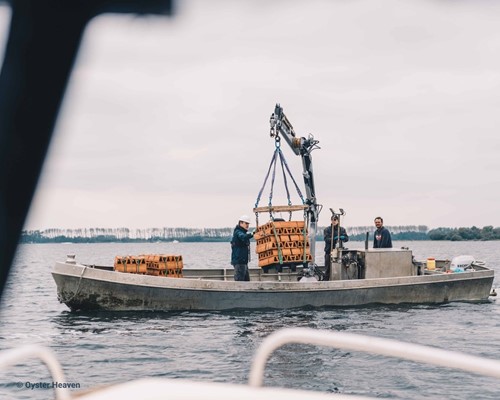
In the Netherlands, we have deployed more than four million juvenile oysters with an eel-fishing family, creating the largest oyster reef restoration project in Europe, and our first-year monitoring data shows promising survival and biodiversity results.
In the UK, Project Luna is a site in North Norfolk that combines native oyster reef restoration with seaweed aquaculture. The project is helping us understand how restored reefs can complement aquaculture and other marine activities. In 2026, we launched Project Orion in Scotland's Forth and Tay area, extending our restoration work into Scottish waters.
Through the SAIC network, we look forward to connecting with aquaculture businesses, researchers and other organisations interested in exploring the relationship between aquaculture and marine ecosystem restoration.
Find out moreShare this