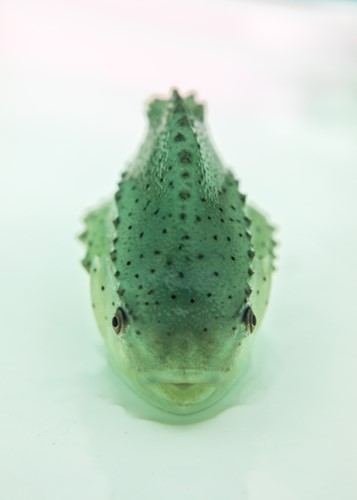
Optimising cleanerfish performance: behavioural, welfare & hatchery innovations for sea lice control
This case study explores the behavioural aspects of cleaner fish for improving delousing efficacy. Building on previous research, it investigates how behavioural traits and personality types can influence delousing success. It also examines how hatchery practices, acclimatisation methods and cohabitation strategies could be optimised to produce more effective cleaner fish for salmon farms.
Project team
Partners: Otter Ferry Seafish, University of Stirling’s Institute of Aquaculture, Swansea University, VisiFish, Loch Duart, Bakkafrost Scotland, Mowi Scotland, RSPCA
Authors: Dr Adam Brooker, Isla Monaghan, Prof. Carlos Garcia De Leaniz, Dr Eduardo Jimenez
Image credits: Dr Adam Brooker, AFHEA, Research Fellow, Institute of Aquaculture, University of Stirling
Impact
These interconnected projects highlight both the immediate and long-term benefits of the use of farmed cleaner fish – and more specifically ballan wrasse – in salmon aquaculture. In the longer term, behavioural screening and selective breeding could enhance delousing efficacy by up to 20%, reducing cleaner fish demand and saving an estimated £5 million annually.
£393,730
Total value
Case study
Download PDF
BACKGROUND
The control of sea lice (Lepeophtheirus salmonis) presents a health challenge for Atlantic salmon farming and finding solutions to this issue remains a focus for the aquaculture sector in Scotland. In response, the use of cleaner fish – particularly ballan wrasse and (recently to a lesser degree) lumpfish – has become widespread, forming a part of integrated pest management strategies. However, the reliance on wild-caught cleaner fish is not sustainable, highlighting the need for a viable, farmed alternative.
Over the past decade, research has made notable progress in understanding the biology of cleaner fish and in developing effective farming methods. Industry-led efforts have largely focused on production and health, aiming to rear robust and healthy fish. Yet, to maximise the potential of cleaner fish as a long-term biological control strategy, improvements in welfare and delousing performance are essential.
This case study explores the behavioural aspects of cleaner fish for improving delousing efficacy. It covers two interconnected, SAIC-funded projects: CleanGain and HEIDI. Building on previous research also supported by SAIC, it investigates how behavioural traits and personality types, shaped by both genetics and rearing environment, can influence delousing success. It also examines how hatchery practices, acclimatisation methods and cohabitation strategies could be optimised to produce more effective, behaviourally suited cleaner fish for commercial salmon farms.
AIMS
The project was structured around four key work packages (WPs), each targeting a specific aspect of cleaner fish behaviour and welfare to improve delousing efficacy:
- Identify and analyse coping styles and personality types in ballan wrasse and lumpfish that are associated with effective delousing behaviour;
- Pilot and evaluate an image-recognition and machine-learning approach for the assessment of welfare and behaviour in cleaner fish, both in hatchery conditions and salmon sea pens;
- Investigate cohabitation effects, assessing the behavioural interactions between cohabiting ballan wrasse and lumpfish, and develop species-specific operational indicators for monitoring mixed-species deployments;
- Pilot hatchery enrichment methods to encourage beneficial behaviours and improve delousing performance during sea deployment.
This case study has been organised in accordance with the project’s four work packages. The aims, methods and results of each work package are described below.
Ballan wrasse and lumpfish personality profiles and delousing behaviours (CleanGain)
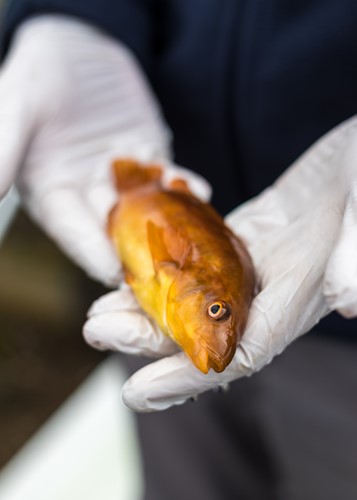
WP1: OVERVIEW - Personality profiling of cleaner fish
Ballan wrasse and lumpfish show complex behaviours, such as dominance and territoriality, which may contribute to differences in delousing performance. These traits are influenced by hatchery conditions, and personality profiling – already used in lumpfish – can help select individuals with desirable behaviours for breeding and improve hatchery practices.
This work package developed and validated a standardised behavioural bioassay for personality profiling in ballan wrasse and lumpfish. Building on previous work, the assay aimed to (a) create scalable methods for assessing personality traits under commercial conditions, and (b) support selective breeding through rapid behavioural screening.
Ballan wrasse were sourced and reared under standard commercial conditions before being transferred to the University of Stirling’s Marine Environmental Research Laboratory (MERL). After acclimatisation, wrasse were PIT-tagged and subjected to behavioural assays in April 2023, and six weeks later in May of the same year, to assess consistency in behavioural responses and repeatability of those behaviours.
The behavioural assay used a tank divided into four zones to assess activity, boldness, sociability, and anxiety across three consecutive 10-minute phases: shelter acclimatisation, novel object exposure, and mirror presentation. Fish behaviour was either video-recorded or observed manually, depending on the site. Key behavioural metrics included movement, interactions with the novel objects and mirrors, and latency to leave the shelter.
Lumpfish and additional wrasse were tested at Swansea University using a simplified version of the same assay protocol, being manually observed rather than video recorded.
Behavioural data from video trials were analysed using image-processing tools. The repeatability of behaviours was estimated using linear mixed-effects models, and six strongly repeatable behaviours were used to derive personality dimensions via Principal Component Analysis (PCA). Statistical models, including zero-inflated Poisson and negative binomial regressions, were used to analyse associations between behavioural traits and individual or species-level variables.
Fish were divided into groups based on their personalities: anxious and non-anxious groups were determined by the amount of time taken to leave the enclosure; bold and shy groups by how often the fish approached novel objects placed in the enclosures; social and antisocial groups by how often the fish approached the mirror; and aggressive and non-aggressive groups by how frequently the fish touched or charged the mirror.
WP1: RESULTS
Out of 26 quantifiable behaviours recorded in ballan wrasse, 10 were found to be repeatable. Strong repeatability (R > 0.4) was observed for eight of these behaviours, including time spent moving, velocity, and mirror or novel object interactions. PCA revealed that two principal components accounted for 84.5% of the variation in personality scores. PC1 reflected a contrast between exploratory activity and sheltering behaviour, while PC2 highlighted freezing and thigmotaxis (a behavioural response to tactile stimuli, e.g. a tendency to stay near walls or perimeters).
Species and weight significantly affected several behavioural traits. Lumpfish took longer to leave the shelter than wrasse, with a wider latency range, indicating higher baseline anxiety. Heavier individuals of both species showed greater neophobia, being less likely to approach novel objects.
Latency to leave the shelter significantly influenced boldness-related behaviours. Fish that emerged more slowly were more likely to approach novel objects (p < 0.001), with lumpfish generally making more and quicker approaches than wrasse. However, species did not significantly affect the number of times fish physically contacted the object.
Anxious and bold traits were examined through fish interactions with salmon models bearing varying numbers of sea lice. Anxiety significantly delayed the first approaches to the salmon model (p = 0.016), particularly in wrasse. While boldness also influenced approach latency (p = 0.012), it did not affect time spent near the models or contact frequency, except in cases where the model had six sea lice, where bold individuals made more approaches (p = 0.013).
Interactions with a mirror provided insight into social and aggressive tendencies. Both latency and species had significant effects on the number of approaches to and contact with the mirror, with those fish that took longer to leave an enclosure more likely to approach a mirror. Lumpfish generally showed greater mirror-directed behaviour than wrasse.
This study confirms that consistent, repeatable behaviours relevant to personality traits can be quantified in both ballan wrasse and lumpfish. Key characteristics – particularly boldness, anxiety, and sociability – correlate with functional behaviours, such as responses to parasite-bearing salmon. Lumpfish tend to be bolder, more sociable, and less anxious. These findings support the potential use of behavioural profiling to inform selective breeding or deployment strategies for cleaner fish in commercial net pens. The assay protocol may be further simplified for large-scale screening, for example, by selecting fish based on latency to emerge from shelter, an accessible proxy for multiple behavioural dimensions.
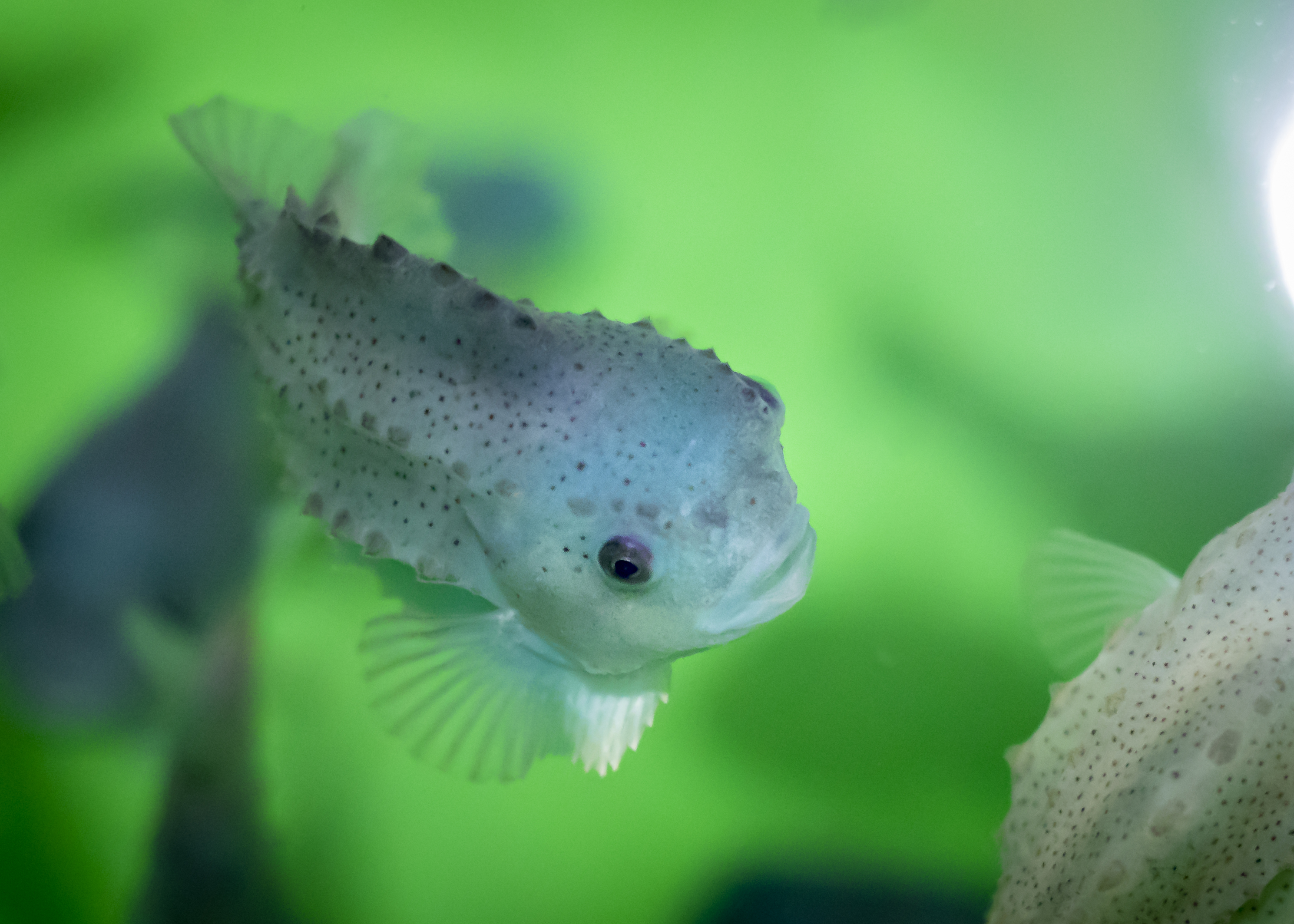
WP2: OVERVIEW - Welfare assessment using computer imaging
This work package explored the feasibility of using image-based tools to analyse body condition in lumpfish and ballan wrasse. The work package tested two methods: (1) an AI-based system (VisiFish) for generating body size ratios from video footage, and (2) image-processing software (ImageJ) for measurements from still photographs.
Sixty-two lumpfish and sixty-two ballan wrasse were sourced from two aquaculture sites. Each fish was filmed and photographed under controlled conditions using GoPro cameras from top and side views. Fish were housed individually in Perspex-structured tanks to optimise visibility and reduce shelter bias, with camera placements designed to minimise distortion.
Each specimen (of both lumpfish and wrasse) was assessed using the lumpfish operational welfare score index (LOWSI), taking into account external body damage, fin damage, eye condition, and suction cup deformities (as relevant to the species). These physical measurements were used as reference data.
Still images were captured and included identification labels and scale markers. Photographic measurements were conducted in ImageJ, with body ratios calculated from manually annotated landmarks.
AI analysis was performed by VisiFish, which used Detectron2 and YOLOv8 for landmark detection on video frames. Measurements of key body ratios, length/width (top view) and length/height (side view) were computed, then used to estimate body condition via BMI categories (normal, underweight, emaciated), using regression models from Gutierrez-Rabadan et al (2021).
WP2: RESULTS
True body measurements were used to test the predictive power of body ratios. Combined height/total length and width/total length ratios predicted BMI with 73% accuracy. Using ImageJ measurements, the same ratios predicted BMI with 45% accuracy, showing moderate but usable reliability.
The key ratio for BMI of lumpfish is the width at the head compared to the width at the belly (MarinHelse, 2018). Therefore, BMI could not reliably be predicted using the VisiFish AI-derived ratios. Even when both ratios were combined, the prediction model yielded low accuracy, also due to variations in fish orientation and angle distortion in 2D footage.
Of the 60 lumpfish filmed, VisiFish successfully generated measurement ratios for 21 individuals. No significant differences were found between AI-derived and known body ratios: width/standard length and width/total length. Mean errors were 5.4% and 7.0%, respectively.
However, when used to predict BMI, AI-derived width/total length and width/standard length ratios alone showed low predictive power. Using both ratios improved accuracy slightly, but results remained statistically weak, highlighting limitations with using 2D video data for BMI estimation.
ImageJ measurements for both species showed strong agreement with direct physical measurements. Paired t-tests found no significant differences in height, standard length, total length, or width, with mean error rates around 3.7%.
Photographic body size ratios correlated significantly with true values. Height/total length had high predictive accuracy (r = 0.97), whereas width/total length was weaker (r = 0.40). Thus, lateral images provided more reliable indicators of body condition than ventral views.
ImageJ-based photographic analysis was found to be an accurate, non-invasive method for assessing fish body condition, particularly when multiple measurements are combined. VisiFish AI reliably identified key body landmarks and ratios in some cases but was limited by angle sensitivity and variable video quality, lowering its effectiveness in estimating BMI.
WP3: OVERVIEW - Impact of cleaner fish cohabitation
This work package investigated the behavioural and welfare impacts of cohabitation between ballan wrasse and lumpfish. The focus was on exploratory and agonistic behaviours to understand whether housing the species together affects fish behaviour.
Over 40 lumpfish and ballan wrasse were initially assessed for baseline operational welfare indicators (OWIs), including total length, weight, fin deformities, eye damage, operculum erosion, and body damage. These welfare checks were repeated halfway through and at the end of the experiment.
Fish were housed in three treatment conditions: lumpfish-only tanks, wrasse-only tanks, and mixed-species tanks. Each tank contained shelter structures such as artificial plants and tubes, and disturbances were limited. Observations were carried out daily for four weeks at random times. Behaviours were recorded through peepholes to minimise interference, and fish were given five minutes to acclimatise after lid removal before each observation.
Exploratory behaviours were defined as movement away from shelter into open tank areas. Agonistic behaviours included nipping or charging and were categorised by species and interaction type (e.g., wrasse–wrasse, lumpfish–wrasse).
Statistical analysis was conducted using R (v4.4.1), employing generalised linear mixed models (GLMMs) and zero-inflated Poisson models to account for distributional characteristics of the behavioural data.
WP3: RESULTS
Cohabitation had a significant effect on the exploratory behaviours of lumpfish. Lumpfish in species-only tanks exhibited significantly more exploratory activity than those in mixed tanks.
Within mixed tanks, lumpfish displayed significantly more exploratory behaviour than wrasse. Wrasse showed low levels of exploration across all treatments, whereas lumpfish in lumpfish-only tanks showed high but inconsistent exploratory activity. Lumpfish in mixed tanks began the trial with minimal exploration but showed a gradual increase over time.
No significant differences were found in agonistic behaviour as a result of cohabitation for either species. For lumpfish, tank type had no significant effect, nor did individual tank. Similarly, wrasse displayed no significant change in agonistic behaviour in mixed versus wrasse-only tanks, with no tank-level effect.
Analysis of species interactions within mixed tanks (using a zero-inflated Poisson model) showed no significant differences across all agonistic behaviour types: lumpfish–lumpfish, lumpfish–wrasse, wrasse–lumpfish, and wrasse–wrasse. Individual tanks, again, had no significant influence on aggression.
This study demonstrated that cohabitation reduces exploratory behaviour in lumpfish but does not affect wrasse. Neither species showed increased agonistic interactions due to cohabitation, suggesting that the risk of aggression between species is minimal. These insights can inform stocking and husbandry decisions to support optimal cleaner fish welfare in aquaculture settings.
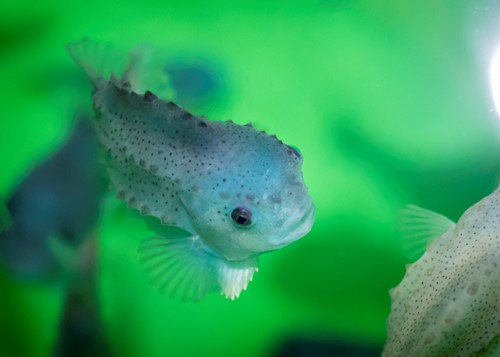
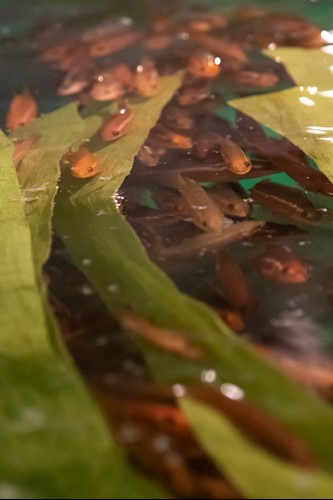
WP4: OVERVIEW – Hatchery enrichment to improve delousing impact in Ballan wrasse (HEIDI)
This work package explored whether dynamic environmental enrichment in hatchery tanks could stimulate more natural behaviours in the ballan wrasse and potentially improve delousing performance after deployment. The trial was conducted between February and June 2023 using commercially reared wrasse.
Two experimental tanks were modified according to a dynamic enrichment protocol, while two control tanks maintained standard commercial rearing conditions. Each tank (3.5 m diameter, 1.5 m deep, 15,000 L) held approximately 3,000 ballan wrasse (25–35 g).
Enrichment aimed to simulate natural rocky reef habitats while also introducing conditions resembling the salmon pen deployment environment. Features included:
- Currents: Inflow pipes were adjusted to reduce circular flow. Four wave makers, set to random current regimes, were installed to mimic natural swell.
- Feed: Feed blocks (Worldfeeds) were used from the start and relocated with each change to encourage foraging behaviour. Pellet feed was reduced to maintenance levels over four weeks.
- Lighting: Overhead lighting simulated a Scottish summer photoperiod, with light-reducing screens used to shield external sources.
Control tanks followed typical commercial practice, including circular flow from an angled inflow pipe, consistent pelleted feeding, and continuous artificial lighting until regular dimming in April.
Fish behaviour was recorded at three points in April, May and June using dual GoPro cameras (one overhead, one underwater) and hydrophones. Each session captured 30-minute video samples per tank.
Data analysis used a previously trained YOLOv8 computer vision model. To improve the detection of small objects (i.e. fish), Slicing Aided Hyper Inference (SAHI) was applied. This method divides frames into smaller segments for individual inference, improving detection rates before aggregating results. Output included coordinates of individual fish positions and frame indices, enabling tracking over time.
A second processing stage generated heatmaps showing fish density, orientation, travel distance, and shoaling behaviour. Shoaling was defined by proximity (within one body length) and alignment (head-tail vector angles under 45°).
Due to time constraints, the original model was used rather than training a new one. An additional 458 labelled frames from HEIDI videos were added to improve performance, but the analysis remains preliminary.
WP4: RESULTS
While the analysis is still in the early stages, several notable behavioural differences were identified between enriched and control tanks.
Heatmaps revealed distinct spatial patterns. In control tanks, fish detections were dispersed throughout the tank. In enriched tanks, detections clustered around the kelp hides, suggesting the use of structured habitat features. However, detection accuracy varied. Some areas, particularly those with low light (e.g., near feed blocks), showed fewer detections, and false positives occasionally occurred near tank equipment such as cables.
Visual observations supported the heatmap data. In enriched tanks, fish shoaled in and moved between kelp hides, showing varied movement and habitat use. In control tanks, fish typically shoaled along the tank perimeter, swimming into the artificial current, a behaviour consistent with typical commercial tank rearing, but potentially less natural.
Velocity calculations from consecutive frame positions indicated a change in fish activity over time. Initially, fish velocities were similar across all tanks. By the second and third recordings, fish in enriched tanks exhibited higher velocities than those in control tanks. This suggests increased movement and potentially greater behavioural stimulation in the enriched environment.
The YOLOv8 model used was originally trained on a different dataset, which limited detection efficiency in this context. Although additional HEIDI-specific training data improved accuracy, further refinement – such as a fully retrained, dedicated model – is needed for robust behavioural quantification. Some areas of the tank had sparse detections, and false positives remain a challenge.
IMPACT
These interconnected projects highlight both the immediate and long-term benefits of the use of farmed cleaner fish – and more specifically ballan wrasse – in salmon aquaculture. Short-term gains include improving hatchery protocols that mimic natural conditions, helping wrasse adapt better to sea pens and potentially increasing individual delousing performance. In the longer term, behavioural screening and selective breeding could enhance delousing efficacy by up to 20%, reducing cleaner fish demand and saving an estimated £5 million annually.
The VisiFish AI system also offers the potential for automated behavioural assessment to support breeding and deployment decisions. However, further progress relies on renewed commitment from the salmon producers, as current interest in cleaner fish appears to be waning in some salmon farming nations, including Scotland. For these findings to translate into sector-wide improvements, continued investment and support are essential. Project outcomes were shared at Aquaculture UK 2024 and Aqua 2024, helping to inform and engage key stakeholders on the future potential of cleaner fish innovation.